



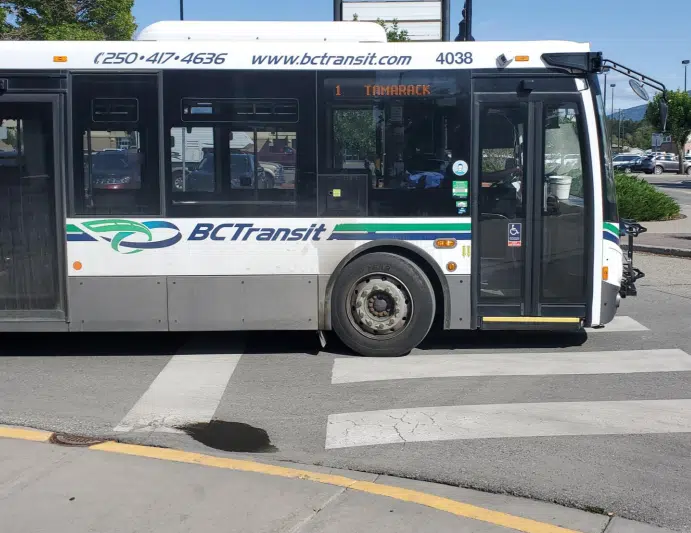
Photo Credit: BC Transit
BC Transit is introducing their new Umo system, which will allow electronic fare payments.
This means you’ll be able to swipe a card or scan your phone to ride the bus
Vice President of Business Development Christie Ridout says the new system has been years in the making.
“We’re really excited about the functionality that exists now,” Ridout says. “Especially things like tapping your debit card. It’s transforming the payment process for our customers. I think we are ready, the market’s ready and we’re just excited to get going now.”
The new system will also allow seamless inter regional transit.
Ridout says Umo will begin it’s pilot phase in Victoria before coming to the rest of the province in 2023.
“We’re going to start the implementation in Victoria, this is a provincial program so we’re putting it into more then 30 of our transit systems across the province,” she says. “We’re going to pilot in Victoria later this year in the fall of 2022, and then we’re going to start rolling it out for the remainder of our systems in 2023.”
In the Lower Mainland, Translink has also introduced similar options for fare payment.
– Christie Ridout, BC Transit Vice President of Business Development
BC Transit announces exciting steps forward in its project to implement an electronic fare collection system across the province.
Today, BC Transit celebrates several project milestones, sharing details of the coming system, announcing the system’s vendor, and releasing the brand that represents the system, Umo (pronounced “you-mo”).
The innovative new system will replace end of life technology and equipment, and introduce contactless tap payment methods that will improve the transit experience.
New payment methods will include mobile app, debit card, credit card, mobile wallet, and reloadable smart card, providing riders with the ability to pick the best payment method for their lifestyle and travel habits.
The new contactless payment methods will increase access to transit by allowing riders to use items they carry every day, removing barriers like requiring them to pre-purchase tickets and passes or carry exact change.
The coming system also introduces a new stored value feature, providing riders with further abilities to select the best option for their travel needs.
Riders using the mobile app and reloadable smart card will be able to load a stored value balance to their account to be drawn from as they ride, in addition to being able to purchase any of the existing fare products.
Riders will be able to easily purchase their desired fare product with their mobile device, through a new web portal, or at a retailer and board the bus by simply scanning their mobile device or tapping their card.
Cash will continue to be accepted for those riders who prefer to use it, but it is expected most riders will find one of the new payment methods a more convenient option.
Other benefits of the electronic fare collection system will include:
- Enabling seamless interregional transit by allowing riders to travel across the province with one payment method
- Improving onboard cleanliness by reducing farebox touchpoints with the implementation of contactless payments
- Improving service reliability by reducing the demand on transit operators to visually validate and administer fare products aboard the bus
- Increasing ridership by utilizing the electronic system’s tools to administer promotions and new programs
The new system will be implemented in transit systems and interregional routes in two phases, initially enabling mobile app and reloadable smart card payment methods before payment by credit card, debit card, and mobile wallets will be enabled.
The Victoria Regional Transit System has been selected for the system’s pilot project and first transit system implementation and can expect to see the system come on board by fall 2022.
Other transit systems and interregional routes scheduled for system implementation include Agassiz-Harrison, Campbell River, Central Fraser Valley, Chilliwack, Comox Valley Regional, Cowichan Valley Regional, Cowichan Valley Commuter, Cranbrook, Dawson Creek, Fort St. John, Fraser Valley Express, Hope Regional, Kamloops, Kelowna Regional, Kitimat, North Okanagan Connector, Pemberton Valley, Port Alberni Regional, Port Edward, Powell River Regional, Prince George, Prince Rupert, Quesnel, Regional District of Nanaimo, Skeena Regional, South Okanagan Connector, South Okanagan-Similkameen, Squamish, Sunshine Coast, Terrace Regional, Vernon Regional, Whistler, and West Kootenay.
After a successful negotiated request for proposals process, BC Transit has entered into an agreement with Cubic Transportation Systems, Inc. (Cubic) for their Umo platform that will power the system.
In addition to their innovative product, Cubic will bring their nearly 20-years of experience supporting fare collection in British Columbia to the project as the long-time vendor for TransLink’s Compass Card network, used in Metro Vancouver.
The Electronic Fare Collection System Project is funded through the Investing in Canada Infrastructure Program.
This project is being cost-shared with the Government of Canada contributing 50 per cent of eligible costs, the Province of British Columbia contributing 40 per cent, and the project’s local government partners contributing the remaining 10 per cent.
The total cost for this project is $23,200,000.
– Submitted by BC Transit



Comments